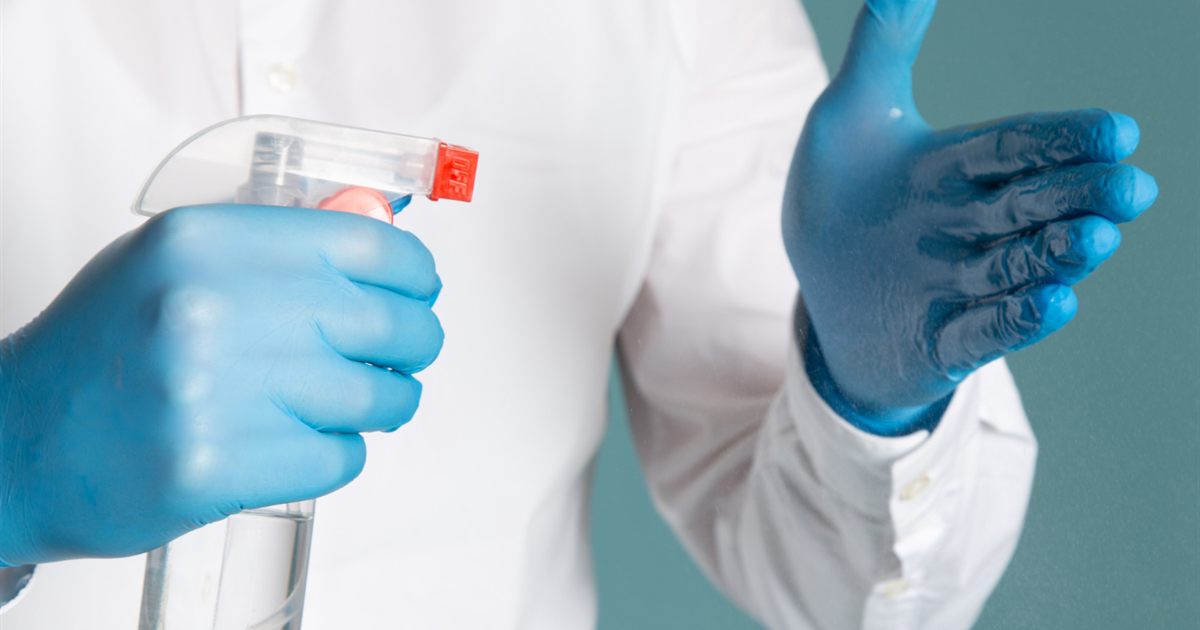
Disinfectants are useful when their intended purpose matches the household task, but misuse can damage surfaces or create avoidable exposure. A simple routine built around the product label helps adults apply, store and dispose of products consistently.
Before purchase
- Confirm that the product is intended for the required surface and use.
- Check whether it is ready to use or needs dilution.
- Review warnings, ventilation and protective-equipment directions.
- Choose a pack size that can be stored safely and used within its stated life.
Households should avoid buying several products with overlapping roles unless there is a clear need. Fewer products can reduce confusion and the risk of applying the wrong formulation.
Prepare the area
Remove food, toys and personal items from the application area. Keep children and pets away. Open windows or use other ventilation when directed, particularly in small bathrooms or utility rooms.
Gather any gloves, eye protection, measuring tools or cloths specified by the label. Do not use kitchen measuring equipment for concentrates unless it is dedicated to that task and stored separately.
Clean first when directed
Visible dirt, grease and residue can interfere with coverage. Follow the stated pre-cleaning step and remove incompatible cleaner residue before applying the disinfectant. Do not layer products while surfaces are wet with another formulation.
If a combined cleaner-disinfectant is used, check whether one or two passes are required for the level of soil. The directions for light cleaning may differ from those for disinfection.
Never create unapproved mixtures
Do not mix disinfectants with bleach, ammonia, acids, descalers, detergents or other products unless the label explicitly provides that instruction. Mixtures can release hazardous vapours, cause splashing or change the intended performance.
Using two products one after another can also create contact between residues. Rinse and dry where directed before changing products. If unsure, use one suitable product rather than experimenting.
Apply the correct amount
Follow the spray distance, dilution, coverage and contact-time instructions. The surface may need to remain visibly wet for the stated period. Do not increase concentration or application amount beyond the directions.
Keep the area undisturbed during contact time. Complete any required rinse, wiping or air-drying step before people or pets return. Wash hands after use according to the instructions.
Protect sensitive surfaces and devices
Check care guidance for electronics, natural stone, wood, decorative metal, acrylic and painted finishes. Apply to a cloth rather than directly only when both the device and product directions permit it. Avoid liquid entering openings.
A test area can reveal immediate finish changes, but repeated use may still affect a material. Stop use and seek guidance if discolouration, softening or residue develops.
Store in the original container
Keep the original bottle, closure and label together. Never transfer disinfectant into a water or soft-drink bottle. Store upright in a secure place away from children, pets, food, direct sun, heat and incompatible products.
Do not rely on a high shelf alone if it can be climbed or reached. A closed or locked storage area may be more appropriate. Inspect containers for leaks, corrosion or damaged triggers.
Manage diluted solutions carefully
Prepare only the amount permitted and needed. Label any stored working solution with the product identity, dilution and preparation date when the directions allow storage. Do not top up an old mixture with a new batch.
If no storage period is provided, do not assume diluted solution remains effective indefinitely. Follow product guidance or contact the supplier for clarification.
Plan for spills and exposure
Keep the label available because it contains first-aid and contact information. For a spill, keep others away, ventilate as appropriate and follow the stated cleanup method. Do not neutralise a spill with another household chemical.
If a product contacts eyes or skin, is inhaled or swallowed, follow the label’s first-aid directions and seek appropriate professional help. Do not induce vomiting or apply a home remedy unless instructed by a qualified source.
Check expiry and disposal
Review stored products periodically. Keep expiry and batch information readable. Do not pour different leftovers into one container. Follow local and product-specific disposal directions for unused liquid and packaging.
Run a simple storage audit
Every few months, check that containers remain upright, closed and legible. Remove unrelated food, medicines or personal-care items from the chemical storage area. Confirm that every prepared solution is identified and within its permitted period. Dispose of unknown or leaking containers through appropriate guidance rather than opening them to investigate.
Shared households should agree who maintains the storage area and replaces damaged labels or closures. New products should not be placed in front of older stock without checking expiry and compatibility.
The main guide to comparing household disinfectant products in Malaysia explains how safety, surface needs, ingredients and cost fit into the purchasing decision. A product that is difficult to store or apply correctly is not a practical household choice.
A short written routine near the storage area can help adults use the same process. Correct use depends on following the current label every time, not remembering instructions from a previous brand or formulation.
Buyer references
- CDC: cleaning and disinfecting your homeReview household use, ventilation and handling guidance.
- US EPA: selected registered disinfectantsFollow the selected product label for application and contact time.