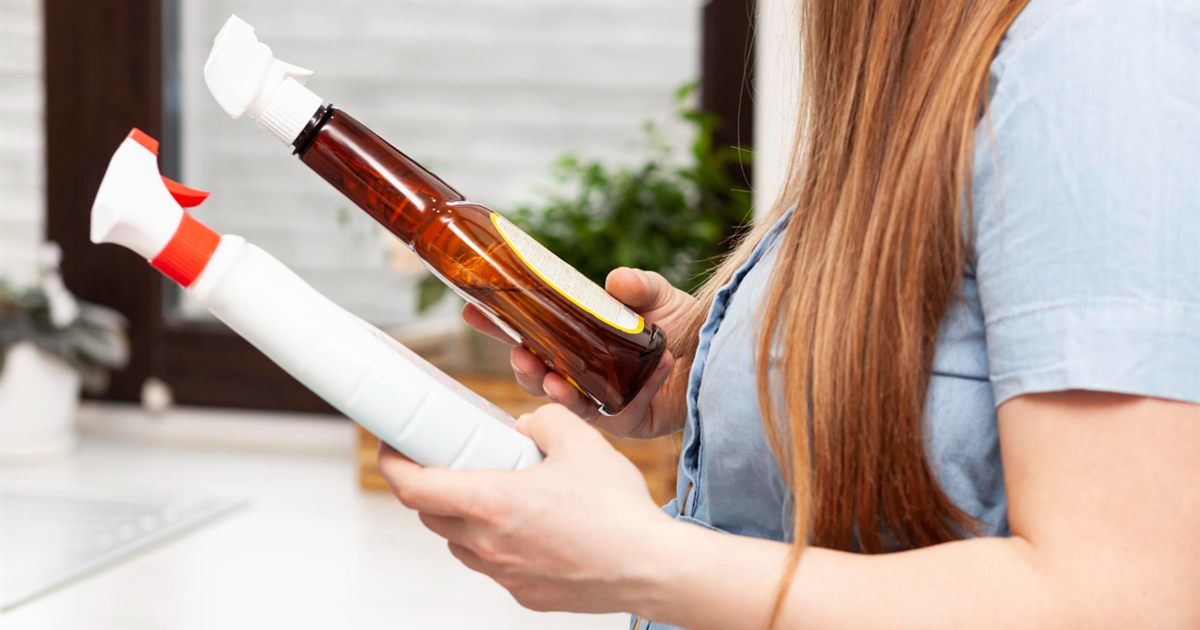
A disinfectant label is both a buying document and a set of use instructions. It should tell the household what the product is intended for, how it is applied, what precautions are required and how it should be stored. Buyers can save time by checking these details before selecting a pack size or fragrance.
Start with the intended use
Identify whether the product is described as a cleaner, sanitiser, disinfectant or combination product. Check the stated surfaces and settings. Hard non-porous household surfaces, fabrics, food-contact areas and skin are different applications and should not be treated as interchangeable.
Look for exclusions as well as permitted uses. Some products can affect natural stone, wood, painted finishes, acrylic, metals or electronic coatings. If the intended surface is not clearly covered, seek written guidance rather than assuming compatibility.
Read the directions in sequence
Directions may require visible dirt to be removed before disinfection. They should explain whether the product is sprayed directly, applied to a cloth, poured or used as a wipe. Follow the stated distance, coverage and preparation method.
Do not combine instructions from different products. A dilution ratio or contact time belongs to the specific formulation and use claim on that label. Similar packaging does not mean that two products can be applied in the same way.
Find the contact time
Contact time is the period a treated surface must remain wet for the stated action. Buyers should consider whether the household can maintain that condition in practice. A product may need reapplication if the surface dries too soon, but only when the directions allow it.
Contact time can vary by use or claim. Check the complete table or instruction panel rather than relying on a headline number. Immediate wiping may turn a disinfection procedure into ordinary surface cleaning.
Check ready-to-use and dilution instructions
Ready-to-use products should generally not be diluted unless directed. Concentrates require the exact amount of product and water stated for the intended application. Buyers need a suitable measuring method and container.
If prepared solution can be stored, the label should guide its container, identification and usable period. Never put cleaning products into beverage containers. If the directions require fresh solution for each use, leftover mixture should be handled according to the disposal guidance.
Review warnings and protective measures
Warnings may address eye contact, skin exposure, inhalation, ventilation, protective gloves or other precautions. These instructions should influence whether a product is practical for the household and intended room. Small spaces may require additional ventilation.
Never mix a disinfectant with another cleaner unless the label explicitly instructs it. Products can react, release hazardous vapours or lose effectiveness. Surface disinfectants should not be applied to people, pets or food.
Look for rinse and food-contact directions
Kitchen counters, cutting areas, high chairs and other food-contact surfaces may have special rinse requirements. A product suitable for a bathroom counter is not automatically suitable for food preparation. Follow the exact sequence and water requirements stated.
Pet feeding areas and children’s items also need product-specific directions. Do not infer safety from a natural ingredient, mild scent or marketing image. Suitability comes from the stated application and procedure.
Check storage, expiry and disposal
Storage directions may specify temperature, ventilation, upright positioning and separation from food or incompatible products. Keep the original label legible and the closure secure. Products should remain out of reach of children and pets.
Check the expiry date or stated shelf life. Age, heat or poor storage can affect a formulation. Disposal instructions may differ for the product, diluted solution and container, so avoid combining leftovers from different bottles.
Compare pack information and supplier support
Record the net volume, dilution yield and likely coverage. A low-priced concentrate can be economical if the household can prepare it accurately. A ready-to-use spray may reduce errors but cost more per application.
Check product information when buying online
Online listings may show only the front of the bottle or use an image from an older package. Before ordering, look for readable directions, warnings, pack size and current product identification. If important panels are missing, request them from the seller. Do not rely on customer reviews to establish dilution, contact time or surface suitability.
When the product arrives, compare the delivered label with the listing before use. Retain the invoice and photograph the batch or product code if the item will be reordered. This makes it easier to recognise a formulation or instruction change later.
The broader household disinfectant products buyer guide explains how label information fits with surface needs, ingredient preferences and total cost. Supplier support is useful for clarification, but any advice should remain consistent with the current label.
Households using concentrates can keep a separate written preparation record near the storage area, but it should not replace the bottle label. The record can note the approved ratio, measuring tool and permitted storage period for the prepared solution. Review it whenever a new pack is opened because instructions may change.
A strong product label makes the intended use understandable and repeatable. If key details are missing or difficult to reconcile, buyers should pause before purchase. Correct use matters more than a long list of front-panel claims.
Buyer references
- NPRA: surface disinfectant registration guidelineReview official product, label and efficacy information requirements.
- US EPA: selected registered disinfectantsUse the label directions and product lists as additional comparison context.