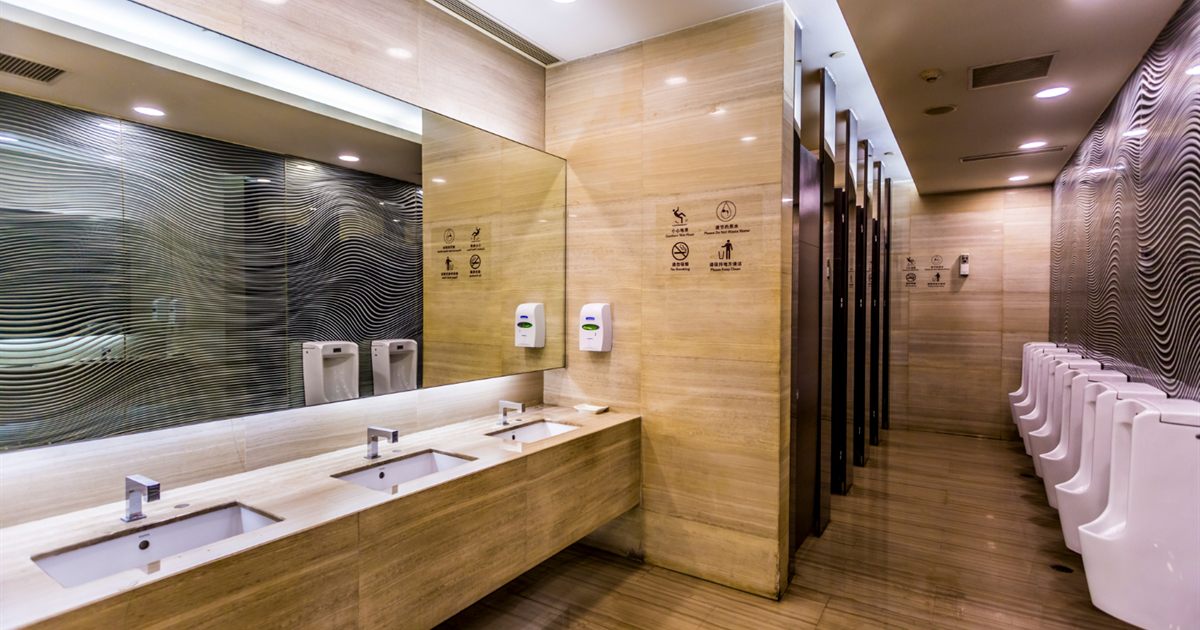
Sanitary ware selected for a home may be used by a small number of familiar occupants. Products in offices, hotels, retail centres, schools, healthcare facilities, and public buildings can face heavier use, less careful handling, and formal maintenance schedules. Buyers should reflect these differences in the specification instead of choosing commercial products by appearance or assuming a residential range will perform identically at higher usage.
Usage volume changes the priority list
Residential buyers often prioritise comfort, personal preference, coordinated finishes, and features used by a known household. Commercial buyers must consider how many people will use each fixture, when peak demand occurs, and how quickly faults must be resolved. A small office washroom and a transport facility are both commercial settings, but their operational demands are very different.
Estimate expected usage by location. High-traffic areas may justify robust controls, straightforward flushing systems, secure fixings, and surfaces that tolerate frequent cleaning. Lower-use executive or hospitality spaces may place more emphasis on design while still requiring maintainable internal components.
Maintenance access can outweigh visual detail
Concealed fittings and integrated designs can produce a clean appearance, but maintenance teams need access to valves, cartridges, cistern components, drains, and electrical connections. Before approval, buyers should ask how common service tasks are performed and whether finished surfaces must be removed. Access panels should be coordinated with the installer and interior works.
Residential owners may accept a longer repair process for a specialised feature. Commercial facilities usually need faster restoration because closing several toilets or showers affects occupants and operations. Standardising selected components across multiple rooms can reduce the number of spares and maintenance procedures the facility team must manage.
Accessibility must be designed into the selection
Commercial projects may need accessible washrooms, suitable circulation clearances, support rails, reachable controls, appropriate basin arrangements, and compliant fixture heights. These requirements should be checked against current project standards and approvals. Buying an item described broadly as accessible does not confirm that the complete room layout will comply.
Residential accessibility can also matter for multigenerational households or ageing-in-place plans. Lever controls, stable support accessories, reachable shower fittings, and easy-clean layouts may provide value even when they are not mandatory. Buyers should treat these as functional decisions rather than additions made after installation.
Water use and operating cost
Water efficiency affects both project goals and ongoing cost. Commercial buyers should compare flush volumes, faucet flow control, sensor operation, and whether performance remains acceptable at the building’s water pressure. Saving water on paper is not useful if users repeatedly activate a fixture or maintenance teams bypass controls because performance is poor.
For homes, water efficiency still matters, but buyers may balance it with shower comfort, hot-water capacity, and household habits. Ask suppliers for clear operating information and discuss pressure conditions with the plumber. Pumps, heaters, mixers, and outlets must work as a system.
Design consistency versus replacement flexibility
Residential projects may use a distinctive collection throughout one bathroom. If a matching accessory becomes unavailable later, the effect is limited. Commercial projects often involve many repeated rooms, making product continuity more important. Buyers should confirm whether models are regular stock, how long ranges are expected to remain available, and which compatible replacement parts exist.
Finish selection also affects upkeep. Highly distinctive finishes can support a design concept but may reveal cleaning marks, require specific care, or be difficult to match during replacement. Commercial teams should approve cleaning methods and replacement strategy along with the initial colour.
Procurement and delivery differ by project type
A residential order may be delivered at once and inspected by the owner or contractor. Commercial projects often need model schedules, tagged packages, staged delivery, floor-by-floor quantities, and records of shortages or damage. Buyers should define responsibility for storage and protection, particularly when sanitary ware arrives before rooms are secure.
Supplier selection should reflect these services. The main guide to comparing Malaysian sanitary ware suppliers explains how to assess stock, quotations, delivery, documentation, and after-sales support. A supplier suited to individual retail purchases may not automatically have the coordination capacity required for a multi-stage project.
Specify according to consequence
The practical difference between commercial and residential sanitary ware comes down to the consequence of failure and the conditions of use. Buyers should ask who will use the product, how often, who will maintain it, how quickly it can be repaired, and whether a matching replacement will be needed. These answers produce a more useful specification than applying a broad label to the entire project.
Cleaning arrangements should be included in the decision. Commercial facilities may use stronger products and clean fixtures several times per day, while residential care is usually less frequent. Buyers should obtain suitable care instructions, confirm them with the operator, and avoid finishes or components that conflict with the planned cleaning regime.
Commercial selections generally need stronger attention to repeatability, access, documentation, and continuity. Residential selections allow more personal tradeoffs between features, design, and cost. In both cases, physical compatibility and realistic supplier support remain essential.
Buyer references
- Standards Malaysia: MS 1402 Part 2 previewReview the code of practice for sanitary system installation in buildings.
- CIDB Malaysia: regulated construction materialsConfirm the standards and certification requirements listed for sanitaryware.